
Electronic Access
Access designed around how the
property operates.
Electronic access should make it easier to manage who can go where, when, and under what conditions — without creating unnecessary complexity for the people who use the system every day.
Start With the Requirement
The right system starts with
understanding the doors.
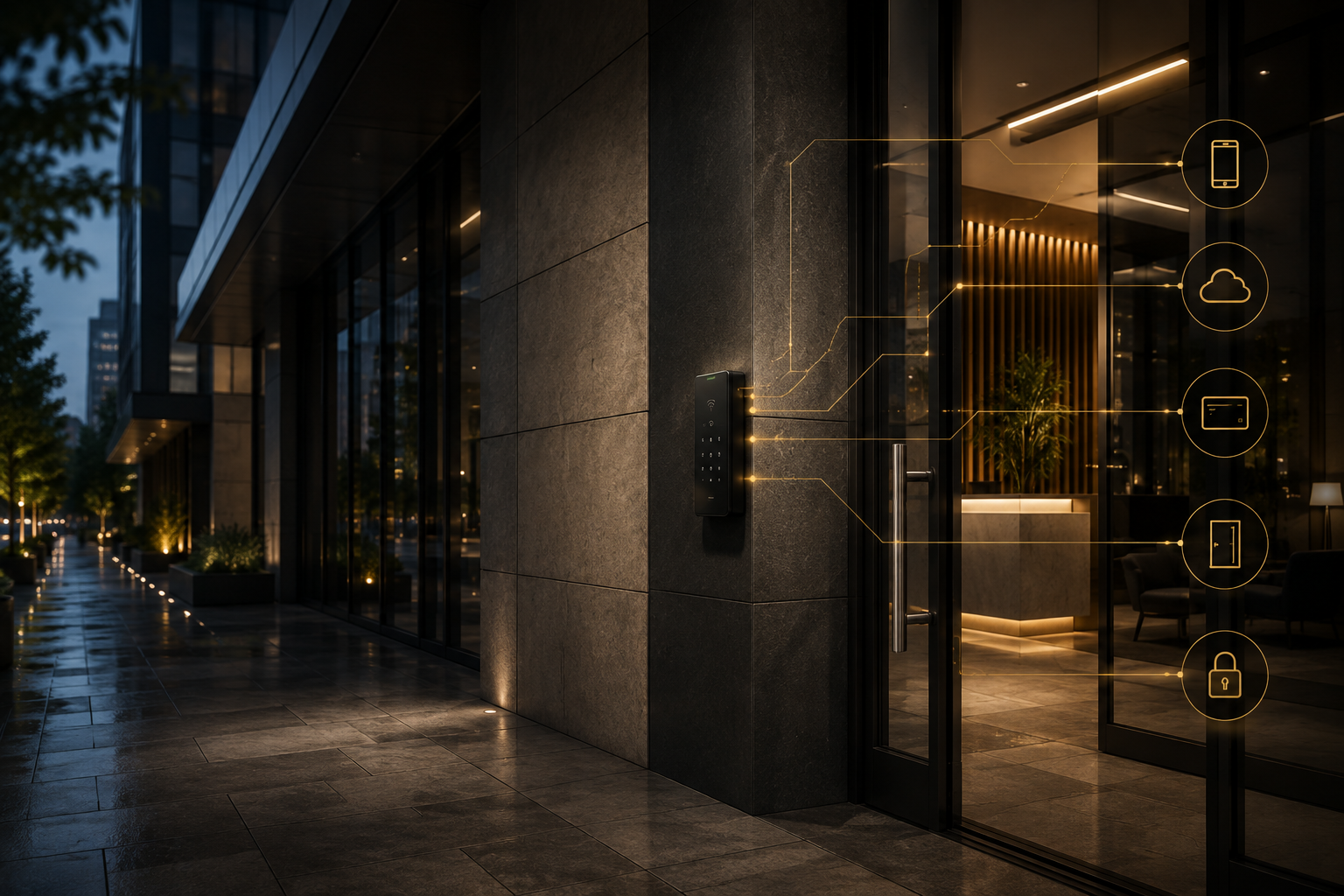
Not every opening needs the same technology. Some doors need standalone electronic locking. Others benefit from real-time connectivity, centralized management, mobile credentials, audit history, schedules, or integration with other systems.
MAS evaluates the operational requirement first, then helps determine the appropriate locking, credential, connectivity, and management architecture.
Electronic Access Capabilities
Electronic Locking
Electronic cylinders, escutcheons, readers, electrified hardware, and intelligent locking solutions for a wide range of openings.
Credential Technologies
Cards, FOBs, mobile credentials, PINs, and other credential approaches selected around user workflow and operational needs.
Centralized Management
Manage permissions, schedules, users, audit activity, and system changes from a centralized platform where appropriate.
Connected & Offline Architecture
Online, wireless, offline, and hybrid architectures designed around the level of control and connectivity each opening actually requires.
Integration
Coordination with visitor systems, elevators, gates, intercom, identity platforms, mobile applications, and other connected technologies.
Programming & Commissioning
System configuration, credential setup, testing, commissioning, and operational handoff.
SYSTEM DESIGN
Designed around the property.
Not around a product.
Access control starts with understanding the openings, the people using them, and the infrastructure already in place. We evaluate the property as a system before determining the hardware and technology that belong at each door.
Existing Hardware
Door construction, existing prep, hardware conditions, and retrofit requirements.
Traffic & Use
Who uses the opening, when they use it, and how frequently.
Life Safety
Egress, fire-rated openings, code requirements, and emergency operation.
Credential Strategy
Cards, mobile credentials, PINs, and appropriate authentication methods.
Infrastructure
Available power, network connectivity, pathways, and existing systems.
Future Expansion
Additional openings, integrations, scalability, and changing operational needs.
DESIGNED AROUND THE OPENING
Not every door needs
the same answer.
A perimeter entrance may benefit from real-time monitoring and immediate control, while an interior office, storage room, or lower-traffic opening may not. We design the architecture around how each opening is actually used—balancing control, infrastructure, scalability, and cost.
Online
Real-time control
Wireless
Flexible connectivity
Offline
Local intelligence
PLANNING AN ACCESS PROJECT?